The True Heart of I Dance with Witches
Jun 27, 2026The True Heart of I Dance with Witches
Some stories are about the places we visit. Others are about the people who change us. This is one of those stories.
Last year, during Walpurgis in Germany, Deanna the NorWitch, and I were filming interviews for I Dance with Witches while celebrating with our friends in Wolfshager Hexenbrut. It was there that I first met Alicja Tomaszewska and the incredible women of Wiedzmuchy from Poland. What began as an interview for our documentary quickly became a friendship that would change the course of the following year.
Before we left for Poland this summer, Alicja sent a message that made me realize this trip would be much more than a festival or anniversary celebration. She described a proposed international women's community of witch sisterhood rooted in historical symbolism, artistic expression through dance and costume, and real-world action for women's rights.
Its mission was powerful:
"We are united by the memory of women who in the past were burned at the stake for their knowledge, intuition, and independence. We transform this history into strength. Through shared dance, the witch costume ritual, and international cooperation, we strive to raise the status and improve the situation of women in the contemporary world."
The mission was also to reclaim the word witch—not as something to fear, but as a symbol of the knowing woman: creative, intuitive, independent, and strong.
I was deeply humbled to learn that the founding leadership of this international sisterhood would include representatives from Poland, Germany, and the United States: Alicja Tomaszewska of Poland, Antje Wedde of Germany, and myself, Lisa Zinsius Supka, of the United States.
As our plane landed in Poland, the magic seemed to begin immediately.
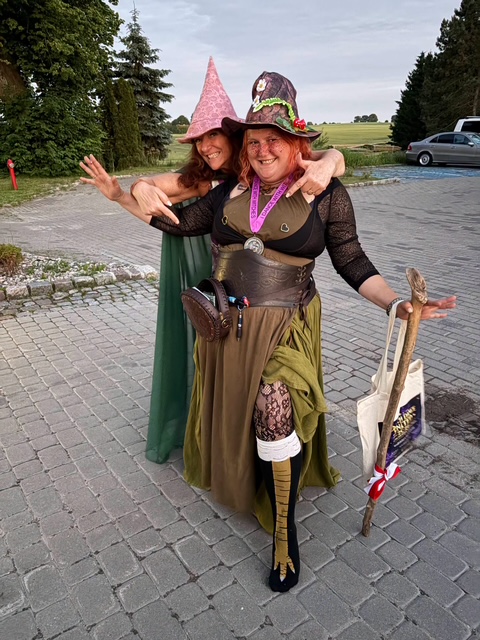
Waiting for us was our interpreter, a barefoot redhead with painted freckles, a radiant smile, and witch attire she wore not as a costume, but as everyday life. She knew almost no one before accepting this opportunity, yet it felt as though the universe had quietly placed her exactly where she belonged. Within moments, she felt like family.
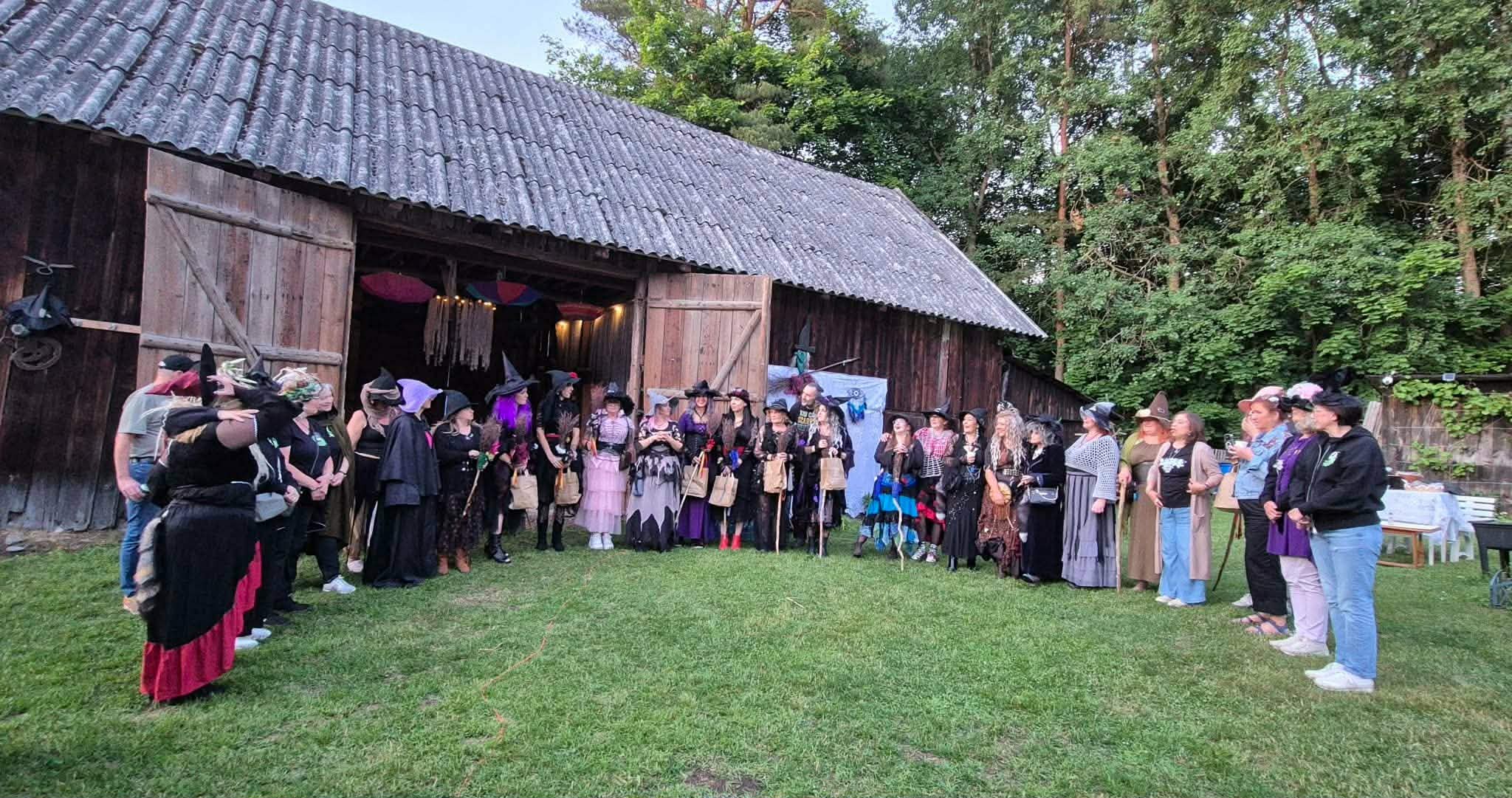 That feeling only deepened when we arrived at a beautiful countryside homestead—a converted barn glowing with twinkling lights, greenery, and warmth. As we stepped from the car, the women of Wiedzmuchy welcomed us by singing Savage Daughter. Standing beside our German sisters from Wolfshager Hexenbrut, surrounded by new Polish sisters, language suddenly seemed unimportant. We understood one another in all the ways that mattered.
Then Alicja took Antje's hand and mine.
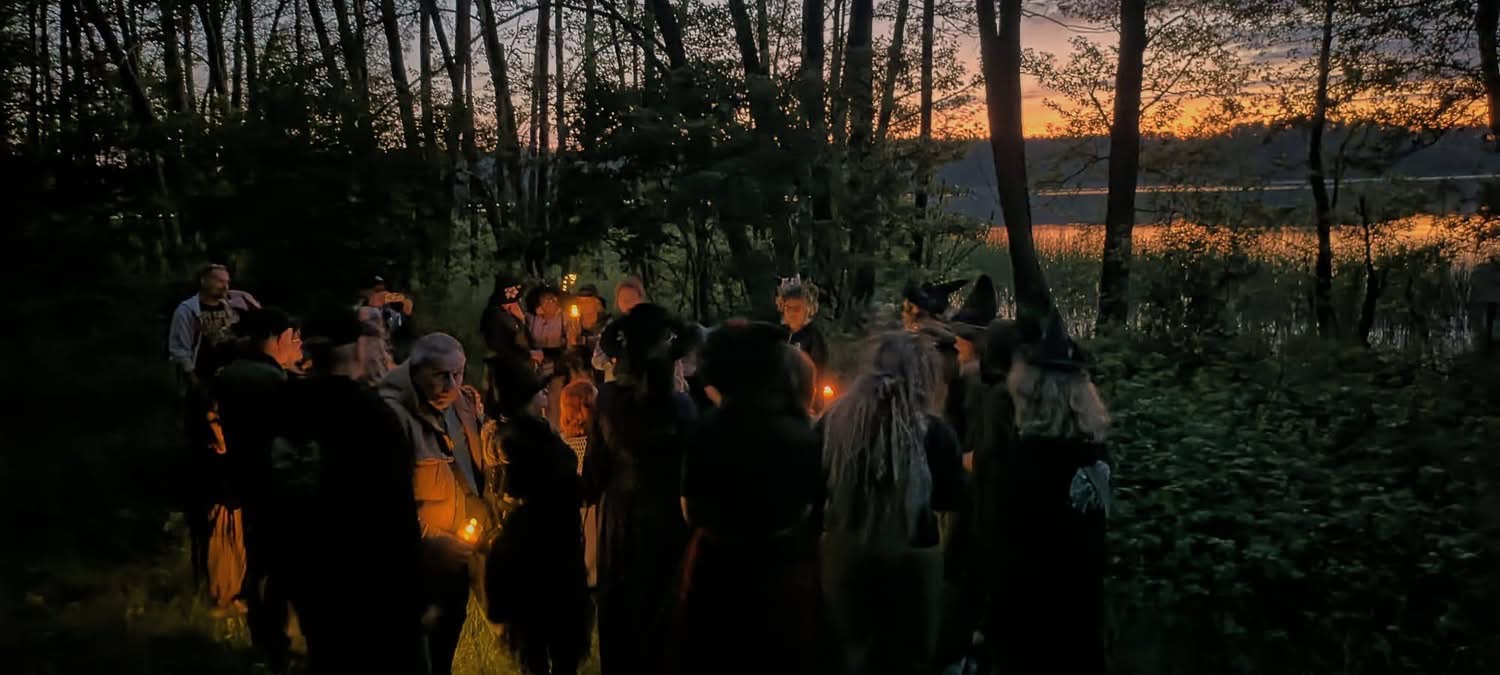
She led us through the forest along a candlelit path to the edge of a quiet lake.
There, beneath the trees, we witnessed something extraordinary.
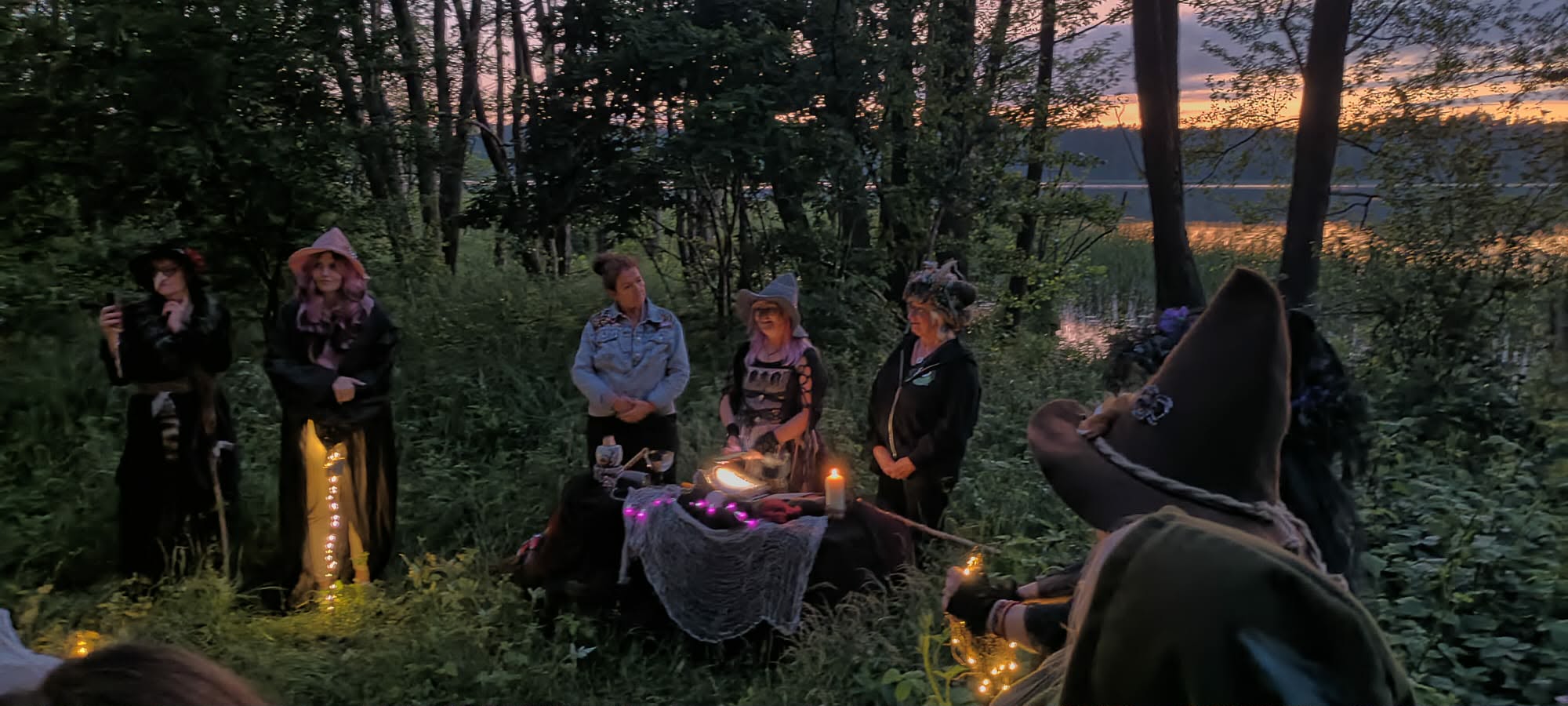
This wasn't simply a ceremony honoring our visit. It was the initiation of new members into Wiedzmuchy—a ritual that had not been performed in many years. I stood beside Alicja and Antje as she welcomed these women into the sisterhood. Although I understood very little of the Polish language being spoken, I understood everything my heart needed to know.
In that moment, we weren't women from three different countries.
We were simply sisters.
As the week unfolded, every day deepened that connection.
Our sisterhood grew as the Bulgarians joined us. We wandered through castles and villages rich with history. We shared meals at one long table, where conversations flowed despite different languages. We laughed often, discovering that our stories as women were far more alike than they were different.
Throughout the week, I realized that sisterhood doesn't require a common language. It requires open hearts. We found ourselves laughing at the same stories, helping each other into costumes before performances, sharing meals around one long table, and embracing one another after dances. Somehow, despite speaking different languages, we always understood what mattered most.
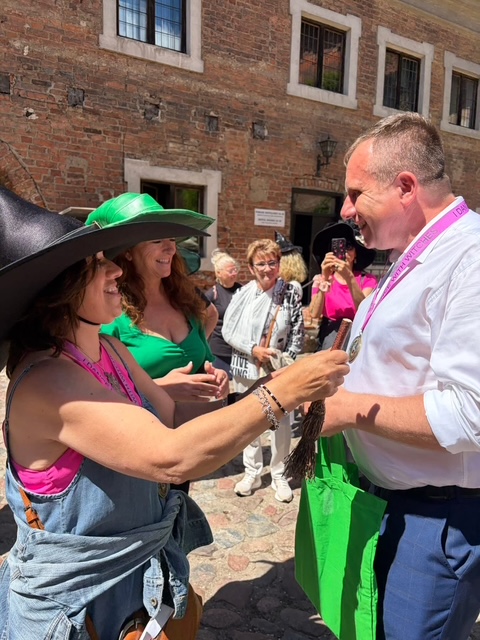
Everywhere we traveled, a witch hat came with us, and everywhere we went, people smiled. Children waved. Communities welcomed this joyful gathering of women dressed as witches, laughing together and celebrating life. It was impossible not to notice how different this image was from the fear that once surrounded the word.
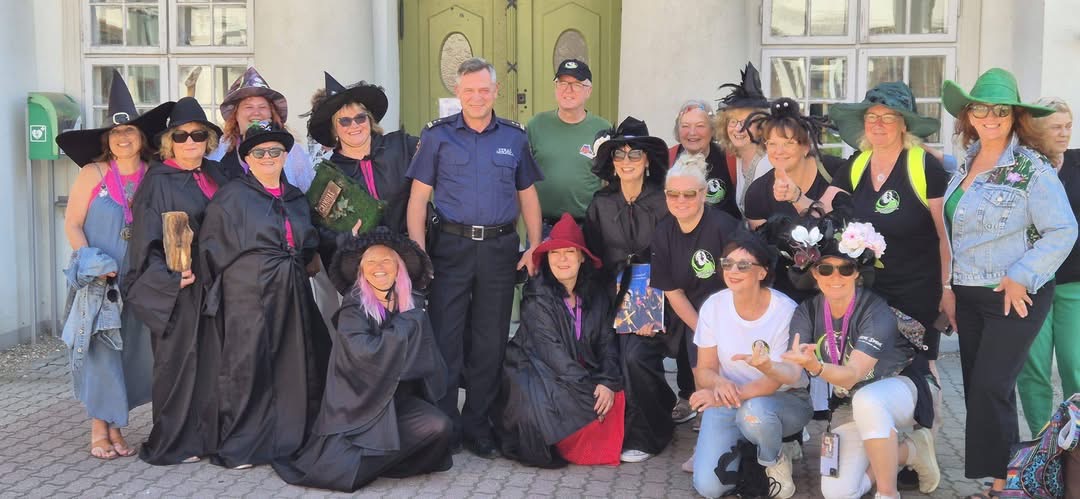 One afternoon we visited the castle in Reszel, where the last woman accused of witchcraft in Poland was burned at the stake.
Her story was heartbreaking. After her betrothed betrayed her, she reportedly declared, "May he burn." Days later, a devastating fire swept through the town, and she was blamed.
Standing before her portrait, something unexpected happened.
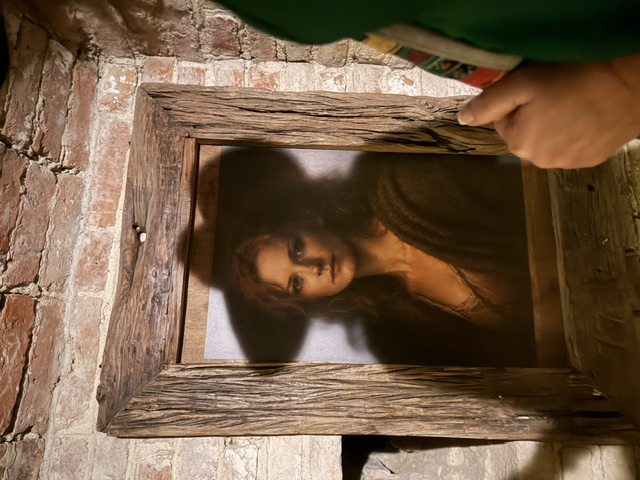
The shadow cast by my own witch hat settled across her face.
For a moment, history felt painfully close. I realized that she could have been any woman—someone blamed because of fear, coincidence, independence, or simply the need to find someone to accuse. That quiet moment stayed with me long after we left the castle.
Festival day was celebrated with an entirely different kind of energy.
The year before, at Walpurgis in Germany, I experienced something I never imagined I'd do—I rode into the celebration on the back of a Harley-Davidson surrounded by a hundred witches. Just weeks before my 60th birthday, I remember thinking, I feel absolutely badass. It was one of those moments that reminded me life still has wonderful surprises waiting.
This year, Poland carried on that same tradition.
Riding through the forests, villages, and countryside of Poland on the back of a Harley-Davidson, surrounded by dozens of witches in flowing dresses, some carrying brooms, was once again one of the most exhilarating experiences of my life. People lined the streets waving and cheering as this joyful procession rolled by.
As I looked around at this incredible scene, one thought unexpectedly made me laugh.
If I died right now, what an interesting eulogy this would make... She died dressed as a witch, riding on the back of a Harley through the streets of Europe, surrounded by other witches.
Thankfully, I survived to tell the story.
But I have never felt more alive.
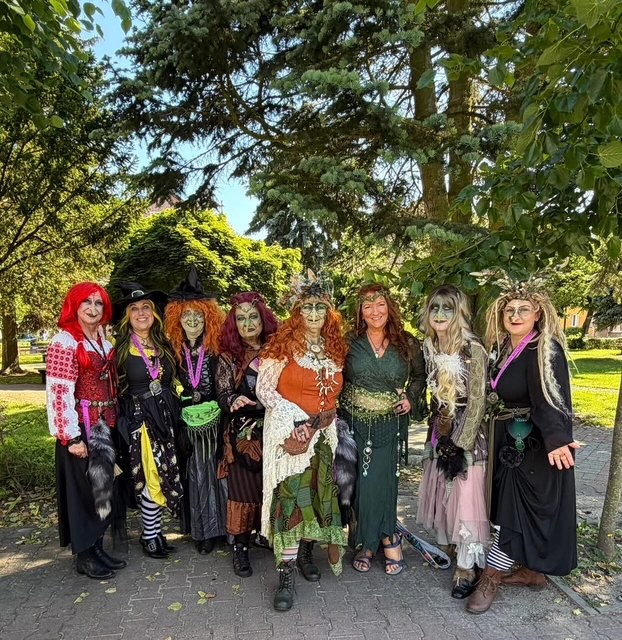
The festival itself was a vibrant celebration of Polish culture, history, and community. Throughout the day, each witch dance group shared its own performances, showcasing its unique choreography and traditions. Then, in one joyful moment, we all came together to dance "Shake Your Bacon"—the original dance created by Wolfshager Hexenbrut that first connected so many of us years ago. Standing together—women from Poland, Germany, Bulgaria, and the United States—it was impossible not to reflect on how one dance had grown into lasting friendships, an international sisterhood, and a shared mission that continues to expand.
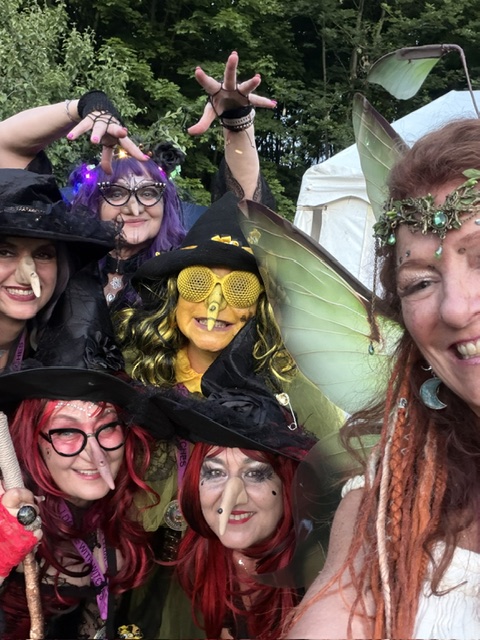
When our costumes failed to arrive in time, Deanna and I suddenly found ourselves with only minutes before taking the stage. Without hesitation, our sisters surrounded us—tightening corsets, fastening skirts, adjusting costumes, helping us become performance-ready in record time.
I smiled because I realized this scene could have happened anywhere in the world.
Backstage, witch dancers speak the same language.
Though there were only two of us representing the United States, we danced with full hearts. During Wicked, we handed witch hats to children and exchanged smiles with dancers from every country. As the words from For Good filled the air, I couldn't help but think about how profoundly these women had already changed my life.
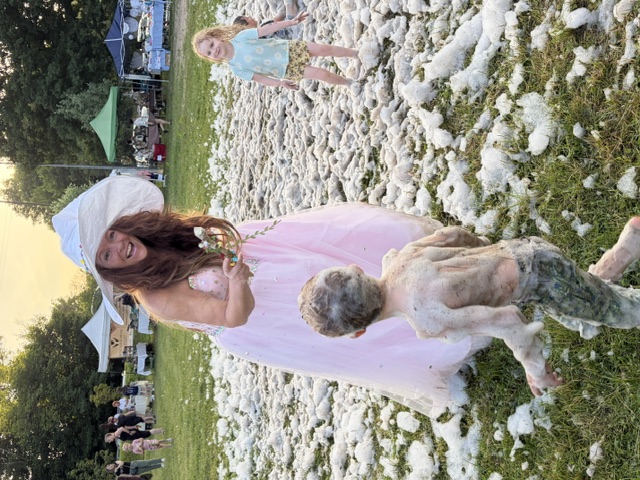
Later that evening, dressed as Glinda, I found myself dancing with children through clouds of foam and bubbles. They were fascinated by the glowing fairy lights woven into my costume—a magical sight in a place without Renaissance Faires. Watching their joy reminded me that magic often begins with imagination shared between generations.
None of this happened by accident.
Alicja and the women of Wiedzmuchy poured countless hours into creating an experience that welcomed every guest with extraordinary generosity. Sponsors provided meals, transportation, and unforgettable events. We met community leaders, explored historic cities, and experienced moments of profound beauty, including an organ concert beneath moving angels in a magnificent Catholic basilica.
Summer in Poland carries its own kind of magic. The sun would rise around 3:00 a.m., filling the countryside with light long before most of us were awake. After gathering each morning for a communal breakfast with our German and Bulgarian sisters, the day's adventures would begin. From historic castles and charming villages to concerts, celebrations, and shared meals, every day unfolded as another chapter in a story we were writing together.
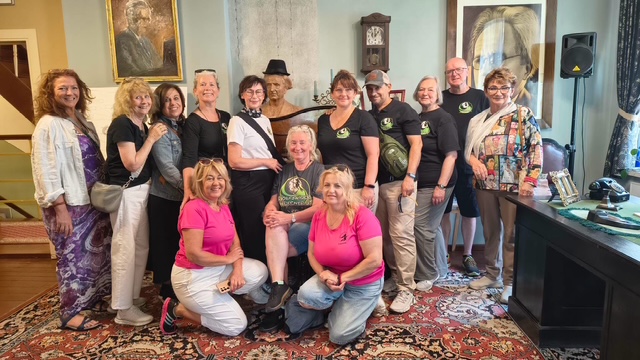
Our final evening carried the same feeling as our first. Once again, we gathered around a fire, sharing traditional Polish food, laughter, stories, and gratitude. It felt less like saying goodbye and more like honoring everything we had experienced together.
It was there that Alicja shared how Wiedzmuchy was born during one of the most difficult chapters of her life. What began as a way to find connection had become an international sisterhood. She thanked Antje Wedde and Wolfshager Hexenbrut for creating the original dance that sparked this movement years ago—a dance that ultimately brought all of us together.
As I listened, I realized this journey had become something much bigger than a documentary.
After interviewing women around the world, I've realized that the real magic was never the costumes, the choreography, or even the festivals. The magic is what happens when strangers become sisters. When history becomes healing. When women from different countries discover they have been telling the same story all along.
That is the true heart of I Dance with Witches.
We dance to honor the women who came before us.
We dance to celebrate the women beside us.
And we dance to build a future where strength, intuition, creativity, and compassion are recognized as gifts rather than feared as threats.
We dance for peace, love, and unity.
Author


